South African energy efficiency regulations for buildings concentrate on heat gain and loss, because these are the most significant energy uses in a building. Although SANS 10400-XA:2026 does include measures around water heating and lighting efficiency, most of the clauses relate to space/air heat gain and loss in some way.
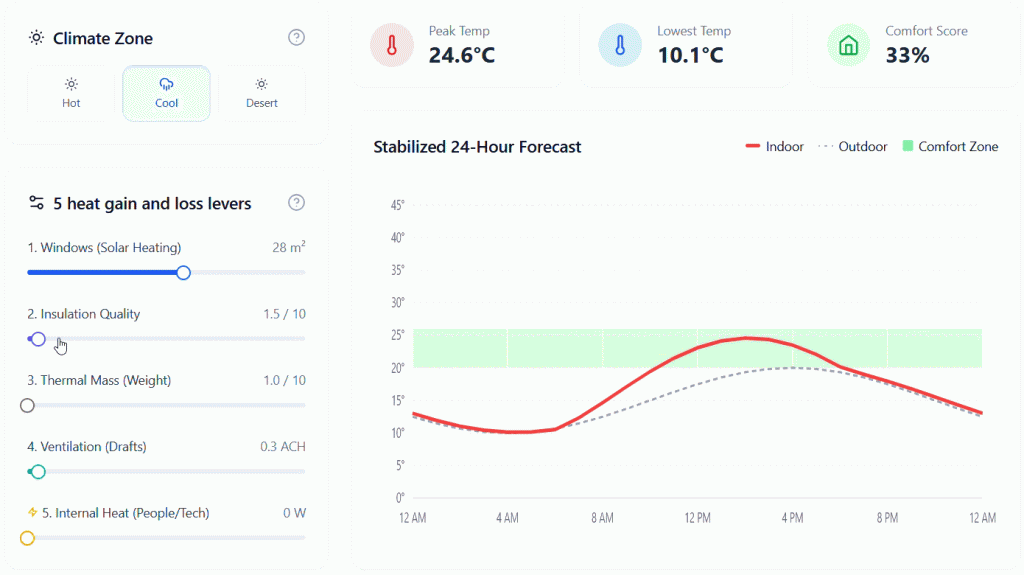
The simple model below deals with 5 different ways that heat can be gained or lost in a building:
The size of windows influences how much heat enters a building when sun shines on them, and also how much heat leaves them (windows are poor insulators compared to walls as a general rule)
The amount of wall, floor and roof insulation influences how hard it is for heat to enter or leave a building – more insulation means it is easier to maintain a bigger temperature difference between inside and outside.
Thermal mass of the building influences how quickly the temperature of a building changes, effectively allowing you to store warmth or ‘coolth’ in the walls and slabs of a building (yes, ‘coolth’ is not a real thing but it’s sometimes useful to talk about ‘putting cold into a store’ rather than the more technically correct ‘extracting heat from a store to buffer against later rises in temperature’
How well ventilated a building is – very well sealed buildings will maintain a bigger difference between inside and outside. Of course, their are other air quality decisions that come in to play- fresh air, and lowered CO2 concentration, must be weighed up against a ‘perfect’ seal.
Finally, the amount of internal heat generated from human, combustion and electrical sources will help to warm a building – depending on the climate, this might be helpful or might make the building too warm.
You can move each of the sliders individually in the model below to see how they influence the internal comfort. For each climate type, there is a solution that allows 100% comfort without air conditioning:
Building Thermal Simulator
Explore how building envelope choices affect indoor temperatures over a 1-week period.
Climate Zone
5 heat gain and loss levers
Peak Temp
–°C
Lowest Temp
–°C
Comfort Score
–%
Stabilized 24-Hour Forecast
Of course, this is NOT a complete and accurate model of every building that exists, but it does help you see how the individual components can be adjusted to help you reach thermal comfort all year round.
Leave a Reply